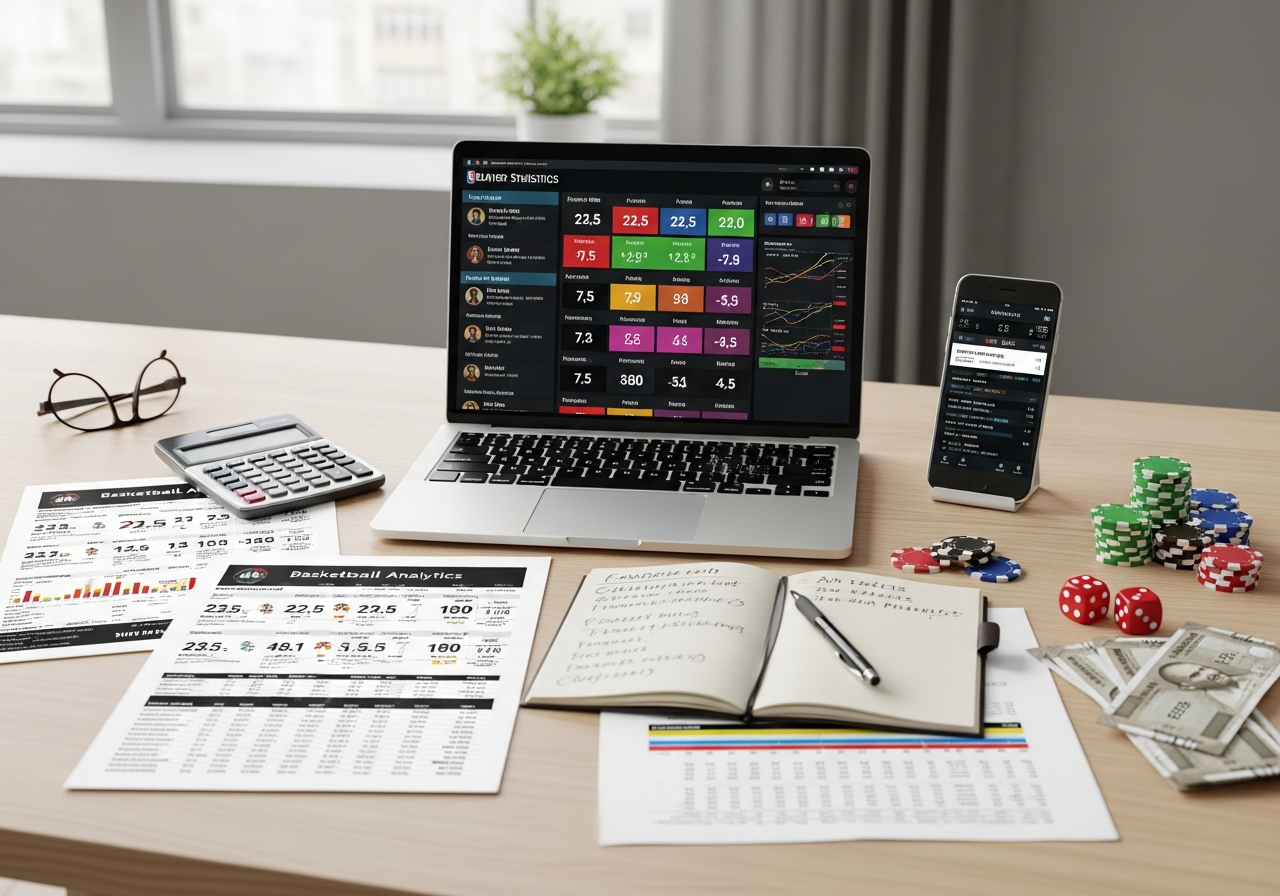
Basketball player prop betting represents one of the most dynamic and data-driven corners of the sports betting world, and it’s increasingly accessible to Indian bettors through global platforms and prediction-style markets. Unlike traditional match-winner or total points bets, player props allow you to wager on individual performance metrics—how many points a specific player will score, their rebounding totals, assist counts, and dozens of other statistical outcomes. For Indian basketball enthusiasts, understanding this market opens doors to sophisticated wagering strategies centered on NBA matchups, emerging local competitions, and the evolving legal landscape surrounding online sports betting.
This guide is designed to walk you through player prop betting from foundational concepts to actionable strategies. Whether you’re accessing props through offshore sportsbooks, prediction-market platforms, or fantasy-style contests, the principles of statistical analysis, matchup evaluation, and risk management remain constant. Rather than chasing daily picks, you’ll learn how to build a sustainable framework tailored to Indian time zones, local payment methods, and the unique regulatory environment you navigate.
Understanding Basketball Player Prop Bets in Indian Markets
Player prop bets are wagers on a single athlete’s performance during a game, isolated from the outcome of the match itself. Unlike a moneyline bet (picking the winning team) or a total bet (predicting combined points), props let you isolate a player’s statistical output and set your own prediction. This granularity attracts both casual bettors seeking entertainment value and professionals building edge-based systems.
For Indian bettors, the majority of prop volume and liquidity exists in the NBA, which dominates global sportsbooks and prediction platforms. You’ll typically access these markets through international operators, many operating legally in jurisdictions like Malta, Curaçao, or Gibraltar, which accept Indian payment methods and rupee deposits. Some platforms also offer prediction-market or fantasy-style variants—such as skill-based games or contest formats—which operate in a different regulatory zone than traditional betting and are evolving rapidly in the Indian market.
What Counts as a Player Prop in Basketball?
The core categories of basketball player props break down into measurable statistical outcomes. Points Over/Under (O/U) is the most popular: the book sets a line (e.g., 22.5 points), and you bet whether a player finishes above or below. Rebounds and Assists follow the same O/U structure—a center might have a 10.5 rebound line, a point guard a 7.5 assist line. Three-Pointers Made props target shooting-heavy players, while PRA (Points + Rebounds + Assists) combines three stat categories into a single O/U line, often offering steadier, less volatile propositions.
Beyond individual stats, milestone props use yes/no binary outcomes: “Will Player X record a double-double (10+ in two stat categories)?” or “Will Player X record a triple-double?” These carry inherent variance because they’re all-or-nothing—either the player hits the target or doesn’t. Similarly, combo props like “Points + Rebounds” or “Points + Assists” let you cherry-pick synergistic stats relevant to a player’s role. A critical rule: in nearly all player prop markets, the player must play for the bet to stand. If someone is ruled out before tip-off, the bet is typically voided (pushed) and your stake is refunded. Minutes thresholds—e.g., “Player must play at least 10 minutes”—also appear on some platforms and affect pricing.
How Indian Bettors Interact with Global Player Prop Markets
Most basketball prop betting volume originates from the NBA and flows through offshore platforms accessible to Indian users. These platforms employ pricing algorithms, live oddsmakers, and risk-management tools shaped by millions of global bettors, which means you benefit from deep liquidity and competitive lines. However, you won’t always find props for every player on every team; liquidity concentrates on high-profile matchups, star players, and common markets (points, assists, rebounds).
Some Indian bettors also explore prediction-market platforms that operate with lower regulatory overhead—these often frame player stat ranges or game outcomes as prediction contests where you assign confidence percentages or vote on outcomes. Fantasy-style platforms offer another avenue, where you build lineups and score points based on actual game stats, blending entertainment with analytical depth. Each format has different rules, payout structures, and odds-setting mechanisms, but the underlying statistical analysis remains consistent: understanding player roles, matchups, and trends informs smart decision-making across all channels.
Key Types of Basketball Player Prop Markets
| Prop Type | Stat Focus | Typical Line Format | Risk Profile | Notes for Indian Bettors |
|---|---|---|---|---|
| Points O/U | Scoring | 20.5, 25.5, etc. | Moderate | Most liquid; subject to usage and defense. High volume means competitive lines. |
| Rebounds O/U | Boards | 8.5, 10.5, etc. | Moderate–High | Depends on opponent’s pace and rim-protection; role stability crucial. |
| Assists O/U | Playmaking | 5.5, 7.5, etc. | Moderate–High | Tied to team pace, ball-handling role, and teammates’ shooting. Volatile on back-to-backs. |
| Three-Pointers O/U | Long-range shooting | 2.5, 3.5, etc. | High | Streaky; small sample sizes daily. Good for specialized shot-tracking analysis. |
| PRA (Points + Rebounds + Assists) | Combined | 35.5, 42.5, etc. | Low–Moderate | More stable than individual stats; less subject to single-game variance in one category. |
| Points + Rebounds | Scoring + Boards | 28.5, 35.5, etc. | Moderate | Useful for centers and power forwards; correlates with minutes and matchup. |
| Points + Assists | Scoring + Playmaking | 26.5, 32.5, etc. | Moderate | Suits guards and wing playmakers; reflects ball-handling volume and shot creation. |
| Double-Double | Two double-digit stats | Yes/No | High | Binary outcome; requires 10+ in two categories. All-or-nothing risk. |
| Triple-Double | Three double-digit stats | Yes/No | Very High | Rare; niche market with high variance but appealing payouts for selective situations. |
Advanced Player Props and Combination Markets
Combination props like PRA offer a compelling middle ground between pure entertainment and edge-based wagering. By merging points, rebounds, and assists into a single stat pool, you reduce the impact of role fluctuation within a single game—a guard might miss his usual scoring rhythm but hit his assist total, keeping the combined line intact. This stability appeals to bettors seeking lower variance, though odds are typically tighter due to lower risk.
Other advanced props include conditional combinations: for example, betting “Player X scores 20+ AND team Y makes 12+ three-pointers” at a higher payout reflecting correlation. Some books offer milestone-based props tied to efficiency (field-goal percentage, true shooting percentage) or role-specific markers (paint touches, potential assists). These require deeper analytics but can yield edges when bookmakers misprice role-based catalysts or when injury news reshuffles a team’s offensive distribution. Indian bettors with time to specialize in a handful of players and teams often find these niche markets less crowded and potentially more profitable than consensus-heavy points props.
Legal and Regulatory Considerations for Player Props in India
India’s betting landscape is fragmented across state-level laws, federal gambling regulations, and evolving digital commerce frameworks. While offshore sports betting—including player props—is widely available and used by millions of Indians, the legal status remains ambiguous at the federal level. Some states have historically permitted betting on certain sports or formats; others have explicit restrictions. Online real-money betting typically exists in a gray zone: operators based abroad are not explicitly illegal for Indian users to access, but hosting betting services within India is restricted.
Prediction-style platforms and fantasy sports contests operate under different regulatory umbrellas. Fantasy sports—where you draft players and score points based on actual performance—are viewed by some regulators as skill-based games rather than pure gambling, potentially allowing wider operation. Prediction markets similarly occupy a distinct category. If you wager through any platform, regardless of format, understanding your local state’s stance and the operator’s compliance posture is essential. Reputable international operators enforce account verification, may restrict Indian users from certain markets, and implement responsible gambling tools.
Integrity concerns loom large in prop markets globally. Match-fixing scandals in cricket have heightened awareness of how accessible individual-player props are to inside information or coordinated manipulation. Legitimate operators impose betting limits on niche props, monitor for unusual activity, and cooperate with integrity-monitoring organizations. This is why choosing established, regulated platforms—even if offshore—matters: they employ surveillance and have reputational incentives to protect the integrity of their odds.
Integrity, Limits and Responsible Betting Practices
Legitimate sportsbooks and prediction platforms enforce responsible gambling safeguards: daily or monthly deposit limits, self-exclusion options, and account-level spending caps. Many also set maximum bet sizes on lower-liquidity props to reduce manipulation risk. As an Indian bettor, you should actively engage these tools: set a monthly prop betting budget, use deposit limits, and avoid chasing losses or betting on hunches without analytical backing.
Bankroll discipline and honest record-keeping form the foundation of long-term success in prop betting. Treat your prop bankroll as separate from other entertainment spending and never bet more than you can afford to lose. Avoid placing wagers based on insider information, tips, or social-media hype; instead, rely on your own research and verified projection tools. Line-shopping across multiple platforms—comparing the same player prop across two or three international books—can yield 5–10% better value and compound significantly over a season.
Reading Basketball Player Prop Odds and Lines
- Identify the bet type and line. You’ll see a player’s name, stat category (points, rebounds, assists, etc.), a numerical line (e.g., 22.5), and odds displayed in American format (-110, -120) or decimal (1.91, 2.00). Over/Under props list the line and associated odds for each side. Yes/No props (double-double, triple-double) show odds for “Yes” (player hits it) and “No” (doesn’t).
- Convert American odds to implied probability. American odds of -110 means you risk 110 to win 100. The formula: probability = (110 / (110 + 100)) × 100 = 52.4%. Negative odds always favor the book’s probability; positive odds (e.g., +100) mean the implied probability is 50%. For -120 odds, probability = (120 / (120 + 100)) × 100 = 54.5%. Understanding this vig (bookmaker margin) reveals how much edge you need to profit long-term.
- Compare implied probability to your projection. If you project a player to score 23+ points with 60% confidence, but the book prices the Over at -120 (54.5% implied), you’ve found value: your 60% vs. their 54.5% is a +5.5% edge. Conversely, if the book’s line matches or exceeds your projection, move on—no edge exists.
- Shop lines across multiple platforms. International operators often price props slightly differently due to their customer base, algorithms, and risk exposure. A line at -110 on one book might be -120 on another. Over the course of a season, consistently choosing -110 over -120 on your plays adds 10% ROI from vig alone.
- Understand pushes and voids. If a player is ruled out before game time, most player prop bets are voided (you get your stake back). Some platforms impose a “minutes played” threshold (e.g., “Player must play 10+ minutes for bets to stand”); if the player plays 9 minutes, your bet is pushed. Always check the rules tab on your book of choice before placing a wager.
- Track line movement and opening numbers. Sharp bettors move lines early; casual action follows. If a prop opens at 22.5 and closes at 23.5, it signals sharp money on the Over. Understanding direction—are the books moving the line to protect their action or because new injury news surfaced?—informs bet timing and relative value.
Understanding Over/Under and Yes/No Formats
Over/Under props set a numerical threshold; you win if the player finishes above (Over) or below (Under) that line. Most stat lines land at the .5 mark (22.5, 7.5) to avoid exact ties and pushes. When a player hits exactly 22 points on a 22.5 line, the Under wins; 23 points means the Over wins. Yes/No props, by contrast, are binary: either the player records a double-double (10+ in two categories) or doesn’t. There’s no push—it’s all or nothing. Payouts for Yes/No props typically favor the “No” side because the outcome is rarer and riskier.
Implied Probability and Value in Basketball Prop Odds
Converting odds to implied probability is the gateway to identifying value. A book’s implied probability reflects their risk-adjusted view of an outcome, factoring in the vig. Your job is to compare your own statistical projection—derived from game logs, matchups, minutes, and analytics—to the book’s probability. If your projection is higher, the Over is underpriced; if lower, the Under is. Over a large sample of bets, consistent value-hunting—taking -110 lines where you have a 55%+ edge—generates positive ROI and sustainable profit.
Professional prop bettors develop projection models (spreadsheets, software, or published algorithms) that estimate a player’s stat output based on historical performance, opponent defense, pace, minutes expectation, and role-specific factors. Comparing your projection to the book’s odds reveals mismatches. A simple workflow: pull recent game logs for your target player, identify his per-minute rate, estimate minutes for the upcoming matchup, multiply to get a baseline, then adjust for opponent strength and matchup-specific factors. If your projection lands at 24 points and the line is 22.5 Over at -110, you have edge; 100 such bets at 55% accuracy yields long-term profit.
Core Statistical Foundations for Basketball Player Props
- Game logs and recent form: Review the player’s last 5–10 games. Is he trending up or down in scoring, rebounding, and assists? One blowout game can skew averages; context matters. Check if recent games included rest days, back-to-backs, or injury recoveries that explain variance.
- Usage rate and minutes: Usage rate (percentage of team possessions the player ends on) is a proxy for opportunity. A player with 30% usage typically attempts more shots and creates more plays. Expected minutes—based on coach trends, health, and rest patterns—directly scales stat projections. A player with 28 PPG over 32 minutes produces roughly 25 PPG if limited to 28 minutes.
- Pace and tempo: Fast-paced teams generate more possessions, inflating counting stats (points, rebounds, assists). Slow-paced teams suppress them. If a player normally scores 22 PPG on a team averaging 98 possessions per game (league average ~100), and his team plays a slower opponent, expect slightly lower output. Conversely, facing a fast-paced defense can boost stats.
- Opponent defensive metrics: Some teams allow more points to shooting guards, fewer to centers. Check defensive three-point percentage (if your player shoots threes), paint defense (rebounding), and assist rates allowed. An elite assist defense suppresses point-guard assist props; a weak paint defense inflates rebound totals.
- Shot mix and efficiency: Does your player take more threes or mid-range shots? Against which defenses does he succeed? A guard with 40% three-point shooting but facing an elite perimeter defense may regress. Conversely, a center in a favorable matchup against poor rim protection has higher upside.
How Matchups and Pace Shape Prop Outcomes
Matchups are the lens through which you filter statistical projections. A player’s season average is a starting point; matchup-adjusted projections account for opponent-specific weaknesses. For example, if a star guard averages 26 PPG but faces the league’s third-best perimeter defense, you might project 23–24 PPG. Conversely, against a bottom-10 defense, expect 28–29 PPG.
Pace and game script—whether the matchup will be competitive or a blowout—matter significantly. Blowouts suppress close-game stats (assists, rebounds) because pace slows and bench players enter. If oddsmakers project a 15-point spread, prop lines account for reduced late-game involvement. Fast-paced, competitive games boost counting stats. Indian bettors should focus deeply on a few key teams or players rather than gambling broadly; specialization in a subset of matchups allows you to outpace casual bettors who lack depth.
Tools and Platforms for Analyzing Basketball Player Props
| Tool Type | Typical Features | Best Use Case | Data Scope | Notes for Indian Users |
|---|---|---|---|---|
| Odds Comparison Aggregators | Real-time odds across books, line tracking, vig calculators | Finding best prices on props | Live odds from major operators | Compare -110 vs -120; identify sharper books. Access may vary by region. |
| Projection Engines | Player stat projections (points, rebounds, assists) updated for lineups and matchups | Quick baseline for your analysis | Season-to-date stats, matchup adjustments | Use free public models (FanDuel, ESPN) as starting points; compare to paid tools. |
| Prop Analytics Dashboards | Filterable prop lists by league, market, odds range; hit rate trackers; simulation tools | Scanning 500+ props daily for likely edges | Historical data, live odds, projection variance | Automate your initial filtering; focus on high-conviction plays. |
| Game-Log Databases | Detailed box scores, per-minute stats, rolling averages | Digging into a specific player’s performance trends | Play-by-play data, opponent-specific splits | Public sources (NBA.com, Basketball-Reference) are free; premium services add context. |
| Injury and Lineup Reporters | Real-time practice reports, roster updates, rule-out/questionable status | Adjusting projections for late-breaking news | Official team reports, credentialed insiders | Monitor team beat writers on Twitter/X; react quickly before line moves. |
| Correlation and Parlay Builders | Identify correlated props for multi-leg bets; simulate parlay outcomes | Building multi-leg plays with appropriate risk | Historical correlations, live odds | Use cautiously; short-term trends can break down rapidly. |
Using Analytics Dashboards to Scan Thousands of Props
Dashboards aggregate props from multiple sportsbooks, overlay your projections (if you subscribe to a model), and filter by your preferences. You might scan “All NBA props Under 23.5 at -110 where my model projects 21.5 PPG”—instantly surfacing mispriced Unders. With 10+ games nightly, 50+ props per game, manual line-shopping becomes untenable. A good dashboard reduces 500+ props to 5–10 high-conviction plays, saving time and improving accuracy.
Projection-Based Tools and Trend Trackers
Advanced platforms offer conditional projections that update when a player’s status changes (injury report, lineup announcement). You can also track your personal historical hit rates: “I’m 52% on PRA overs when players have 28+ minutes and opponent pace > 100 possessions/game.” This granular feedback loop sharpens your edge. Over a season, Indian bettors should export their bets into a spreadsheet, segment by prop type and conditions, and analyze P&L to identify which angles work.
Strategy Frameworks for Basketball Player Prop Betting
- Isolate games with exploitable context. Scan the NBA schedule for matchups featuring pace mismatches, defensive vulnerabilities, rest patterns, or injury-related role changes. A team missing a key defender suddenly becomes weak on perimeter shooting; a fast-paced team draws a slow-paced opponent. Limit your betting to 1–3 games per night where you’ve identified real edges, rather than forcing bets across 10 games.
- Identify players whose roles align with that context. Once you’ve spotted a game, pinpoint which players benefit. A weak perimeter defense favors volume shooters; poor paint defense favors centers and power forwards. A fast pace inflates assist totals for playmakers. Match player and matchup, not the other way around.
- Validate recent form and check projections. Review the player’s last 5–10 games, minutes trends, and usage. Confirm your projection aligns with recent output and accounts for rest days or injury impacts. If a player has played 32 minutes per game recently but you expect 28 minutes due to a teammate’s return, adjust downward.
- Compare your projection to available odds. Calculate the implied probability of each book’s line. If your projection is 23 PPG and the line is 22.5 Over at -110 (implied 52.4% probability), you have a small edge. If the line is 23.5 Over at -110, the implied probability (45%) is below your projection (60% implied on 23+ PPG)—clear value on the Over. Pass on lines where you lack meaningful edge.
- Shop lines and place the best-priced bet. If three books offer the same prop, find the sharpest odds. -110 is preferable to -120; +100 beats -110. This vig-optimization compounds over a season into meaningful ROI gains.
- Log every bet and review. Record the player, prop, line, odds, date, and result. Monthly analysis by prop type and context reveals which angles work. Cut underperformers; double down on edge-rich categories.
Matchup-First vs Player-First Approaches
Matchup-first: Scan the schedule for games with pace/defense mismatches, then identify which players exploit those weaknesses. This approach suits advanced bettors with broad NBA knowledge; you catch widely overlooked edges before consensus catches up.
Player-first: Choose a few players you trust (e.g., a star guard you follow closely, a niche big man), validate their props against upcoming matchups, and bet only when conditions align. This approach suits specialists who sacrifice breadth for depth; you beat the market on a narrow band of props where you’ve built superior knowledge.
Both work. Matchup-first scales if you can develop efficient scanning habits; player-first maximizes edge by leveraging expertise. Most successful Indian bettors eventually blend the two: they identify 3–5 core players, scan their weekly matchups, and place selective bets when conditions align.
Specialized Tactics for Points, Rebounds, Assists and PRA
| Market Type | Key Edge Drivers | Common Mistakes | Ideal Use Cases |
|---|---|---|---|
| Points O/U | Usage rate, matchup defense, shot quality, pace | Overweighting season average; ignoring role changes | Volume scorers; clear usage matchups (e.g., backup returning, limiting minutes) |
| Rebounds O/U | Minutes, opponent pace, rim protection, role stability | Confusing total rebounds with available rebounds; ignoring blowout risk | Centers/power forwards; fast-paced teams; weak defensive rivals |
| Assists O/U | Ball-handling role, team pace, teammate shooting, turnover risk | Ignoring teammate composition changes; placing too much weight on streaks | Point guards, playmakers; teams with high pace or low-efficiency shooting teammates |
| PRA Combo | Aggregate usage; less sensitive to single-category variance | Assuming PRA is always “safer” (it’s not, just different); missing role overlap changes | Lower-variance betting; specialist bettors; games with uncertain minutes or role splits |
| Three-Pointers | Shot-attempt rate, shot quality vs opponent, hotness trends | Overweighting recent streaks; ignoring small sample sizes | High-volume shooters; clear matchup advantages (e.g., weak three-point defense) |
| Double-Double / Triple-Double | Role versatility, game pace, opponent strength, bench time | Chasing unlikely outcomes; placing too much faith in edge projections | Special/novelty plays; entertainment value combined with selective edge bets |
Targeting Points-Heavy Guards and Usage Spikes
Ball-dominant guards—players who handle the offense and generate their own shots—offer clear points-prop edges when matchups align. A point guard averaging 24 PPG on 28% usage faces a struggling perimeter defense and a fast-paced opponent: expect 26–28 PPG. Conversely, against an elite defense, project 20–22 PPG. Usage stability is crucial; if a teammate returns from injury or a trade reshuffles roles, the edge evaporates.
Short-term usage spikes—temporary role increases due to injuries or rest rotation—also create opportunities. If a backup shooting guard steps into the starting lineup due to injury, his shot volume may spike 30–40% above baseline, inflating points props. Monitor team health and depth-chart changes obsessively for these catalysts.
Betting Rebound and Assist Specialists
Centers and power forwards often derive their prop value from rebounds and assists rather than pure points. A 6’11” rebounder averaging 11 boards per game in 30 minutes on a fast-paced team benefits from game pace and available rebounds. Against a weak offensive rebounding opponent, expect an Over. A backup point guard with poor shooting but high assist rate thrives when he gets minutes; track backups closely for surprise starts, which can double their stat output.
Parlays and Correlated Basketball Player Props
- Correlation awareness: When you chain player props into parlays, some are correlated—one’s outcome influences the other’s. A team’s 20-point win increases bench-player scoring but suppresses starters’ stats. A high-volume game inflates both the leading scorer’s points and his team’s total assists. Using correlation strategically (betting correlated props with higher combined odds) or avoiding it (diversifying independent props) affects parlay outcomes. Understand which props you’re combining.
- Short-term trends and role volatility: Don’t rely solely on a player’s hot streak or recent over-hit rate when building parlays. Role changes, injuries, and lineup announcements alter baseline expectations rapidly. A star averaging 25 PPG may dip to 20 PPG if he shifts to bench scoring to rest; parlays built on yesteryear’s output collapse.
- Conservative stake sizing: Parlays have compounding risk. A three-leg parlay at -110 per leg has only a 57% hit rate to break even (0.524^3). Entertainment-focused parlays should represent <5% of your bankroll. Limit parlays to 2–3 legs with independent, high-conviction edges to preserve long-term viability.
- Avoid chasing odds: A 10-leg parlay paying 500-to-1 is tempting, but the probability of hitting all 10 is near zero. Stick to 2–4 legs with +200 to +600 payouts, where variance and edge balance reasonably.
Managing Risk in Multi-Leg Player Prop Parlays
Parlay risk compounds exponentially. If each leg has a 55% edge, a two-leg parlay has a 55% × 55% = 30.25% hit rate—much lower than individual legs. The payout (typically +260 at -110 odds) compensates, but variance spikes. Expect 5–10 losing streaks of 2–3 legs in a 100-parlay season. Set a per-parlay stake that’s 1–2% of your bankroll, never bet your daily budget on a single parlay, and track parlay P&L separately to identify if this tactic is profitable for you. Many bettors find parlays fun but unprofitable; honest record-keeping reveals the truth.
Live and Pre-Game Basketball Player Prop Markets
| Market Timing | Data Available | Volatility | Best Use Case | Key Risks |
|---|---|---|---|---|
| Pre-Game | Full rosters, official lineups, injury reports | Low–Moderate | Line shopping; thorough matchup analysis; avoiding late-breaking news surprises | Injury news breaks after lines post; sharp money can move lines quickly. |
| Live (In-Play, Q1/Q2) | Early-game performance data, foul trouble, game pace confirming | High | Exploiting game script confirmation (pace, defense adjusting, blowout risk) | Lines move rapidly; limited time to process data. Requires fast internet and quick decision-making. |
| Live (Q3/Q4) | Full three-quarter data; starters’ rest patterns emerging | Very High | Bench-player props; late-game role changes; minutes confirmation | Extreme volatility; books adjust aggressively. Often requires the fastest reflexes to find value. |
Adjusting for Late Injury News and Line Movement
Injury news arriving 30 minutes before tip-off can reshape props entirely. A star guard ruled out shifts usage to backup; overs on the backup’s points suddenly become valuable, while the star’s props are voided. Indian bettors in different time zones may face challenges: NBA games often tip at 12:30 AM or 3:30 AM IST, making real-time monitoring difficult. Set up alerts via mobile apps or social media to catch major roster updates. Pre-game research should account for injury probabilities; if a starter is “questionable,” shade your projections downward and be ready to pivot if an official rule-out is announced.
Dynamic projection tools that auto-adjust when a player’s status changes (based on manual tags like “Out” or “GTD”) help. Many sophisticated platforms update implied minutes and usage rates within seconds of a status change, reflecting how player props should shift.
Bankroll Management and Risk Control for Indian Bettors
- Define your total prop bankroll. Separate from your general sports betting budget, allocate a specific amount—say, 5–10% of your overall entertainment budget—exclusively for player prop betting. This is money you’re comfortable losing; never risk rent or essential savings.
- Set unit size based on bankroll and risk tolerance. If your bankroll is ₹10,000, each unit might be ₹200–₹500. A standard bet equals 1–2 units; a high-conviction play might be 2.5–3 units. Losing 5–10 units without panic is your buffer; if you hit that limit, stop and reassess.
- Cap exposure per game and player. Avoid placing more than 10–15% of your bankroll on a single game, even across multiple props. This prevents one bad matchup from devastating your account. Similarly, betting multiple props on the same player (e.g., points Over, assists Over, PRA Over) creates redundant risk; diversify across different players and stat categories when possible.
- Track ROI by market type and context. Export your bets into a spreadsheet: player, prop, line, odds, result, and relevant context (opponent defense, minutes expectation, pace). Monthly analysis reveals which prop types and contexts yield edges. If points props are +5% ROI but rebounds props are -8% ROI, shift allocation toward points.
- Adjust stakes based on edge confidence. A 55% edge merits a 1-unit bet; a 60%+ edge justifies 2–3 units. Conversely, if your edge shrinks to 52% (near break-even after vig), reduce to 0.5 units or pass. Dynamic stake sizing optimizes long-term returns.
- Avoid tilt and loss-chasing. After a losing streak, resist the temptation to increase bet sizes to recoup losses. Stick to your unit plan, trust your process, and understand that variance is normal. A 55% hit rate yields 15–20 consecutive losses in a 1000-bet sample; weathering these periods is critical to long-term success.
Tracking Performance and Refining Your Edge
Export every bet you place into a spreadsheet or simple betting tracker. Record the player, prop type (points, assists, etc.), line, odds, result, and any relevant context (opponent, minutes, pace, injury status). Every month, aggregate data by prop type, context, and date-range. Calculate hit rate, average odds, ROI, and variance. Identify underperforming angles—e.g., “Assist overs on slow-paced games are -15% ROI; stop betting these.” Cut them ruthlessly. Conversely, angles showing +10% ROI should receive increased allocation.
Professional bettors in the U.S. and Europe maintain meticulous records and adjust their strategies quarterly. Indian bettors should adopt the same discipline. A simple Google Sheet with 50 bets per month yields actionable insights by season’s end; ignore this process and you’re flying blind, vulnerable to recency bias and emotional decision-making.
Responsible Play in a Growing Indian Basketball Market
India’s betting environment is evolving: some states are exploring regulated frameworks, some operators are expanding local offerings, and responsible gambling is gaining cultural visibility. Position player prop betting as skillful entertainment and analytical practice, not a primary income source or substitute for employment. Set monthly deposit limits, use self-exclusion if you lose control, and never bet borrowed money.
If you find yourself chasing losses, increasing stakes to recoup, or betting beyond your budget, seek help. Many reputable operators offer self-exclusion and reality-check tools; use them. India also has emerging harm-reduction resources and gambling counseling services; familiarize yourself with them. Responsible betting ensures you enjoy props long-term without financial or emotional damage.
Building an India-Focused Basketball Prop Betting Workflow
Combine the frameworks, tools, and discipline outlined above into a repeatable, sustainable daily routine. Your workflow should account for Indian time zones (NBA games often tip in late evening or early morning IST), payment and access constraints, and the platforms you’ve selected.
From Research to Execution: A Sample Daily Routine
Evening (6–7 PM IST): Review tomorrow’s NBA schedule and tonight’s late games. Check injury reports from credible sources (ESPN, team beat writers on Twitter/X). Note any roster changes, rest days, or role adjustments affecting your target players.
8–9 PM IST: Run your projection model or review public projections (FanDuel, ESPN) for key matchups. Compare your projections to available odds at 1–2 offshore books. Identify plays where you have clear edge (55%+ confidence, -110 or better odds). Document candidates in a spreadsheet.
10–11 PM IST: Narrow to your top 1–3 plays. Perform final matchup validation: opponent defense rankings, pace, recent form, minutes expectation. For each play, calculate implied probability, compare to your projection, confirm bet sizing aligns with your bankroll rules. Place bets at the book with the best line, log details (player, prop, line, odds, stake, time placed).
Late night / early morning (as games approach): Monitor injury status one more time. If a player is ruled out, your push-protected bet is handled automatically. Watch the first quarter or two if you have time; early game flow confirms pace and your projections.
After games resolve: Log results in your tracking spreadsheet. Track hit rate, odds, and ROI. Note any surprises (e.g., unexpected role changes, blowout impact) for future reference.
Weekly: Aggregate performance by prop type and context. Identify working angles and cut underperformers. Adjust future bet sizing and focus areas.
This routine, once automated, requires 30–45 minutes daily and positions you well ahead of casual bettors. Consistency and discipline—not daily tips or hot picks—drive long-term edge. By specializing in a few NBA teams, markets, and statistical contexts, and by relying on data-driven projections rather than intuition, Indian bettors can build sustainable, profitable player prop strategies despite regulatory constraints and platform limitations.